Zärtlichkeit, Zins & Zusammenbruch. Über den Körper als erschöpfte Ressource
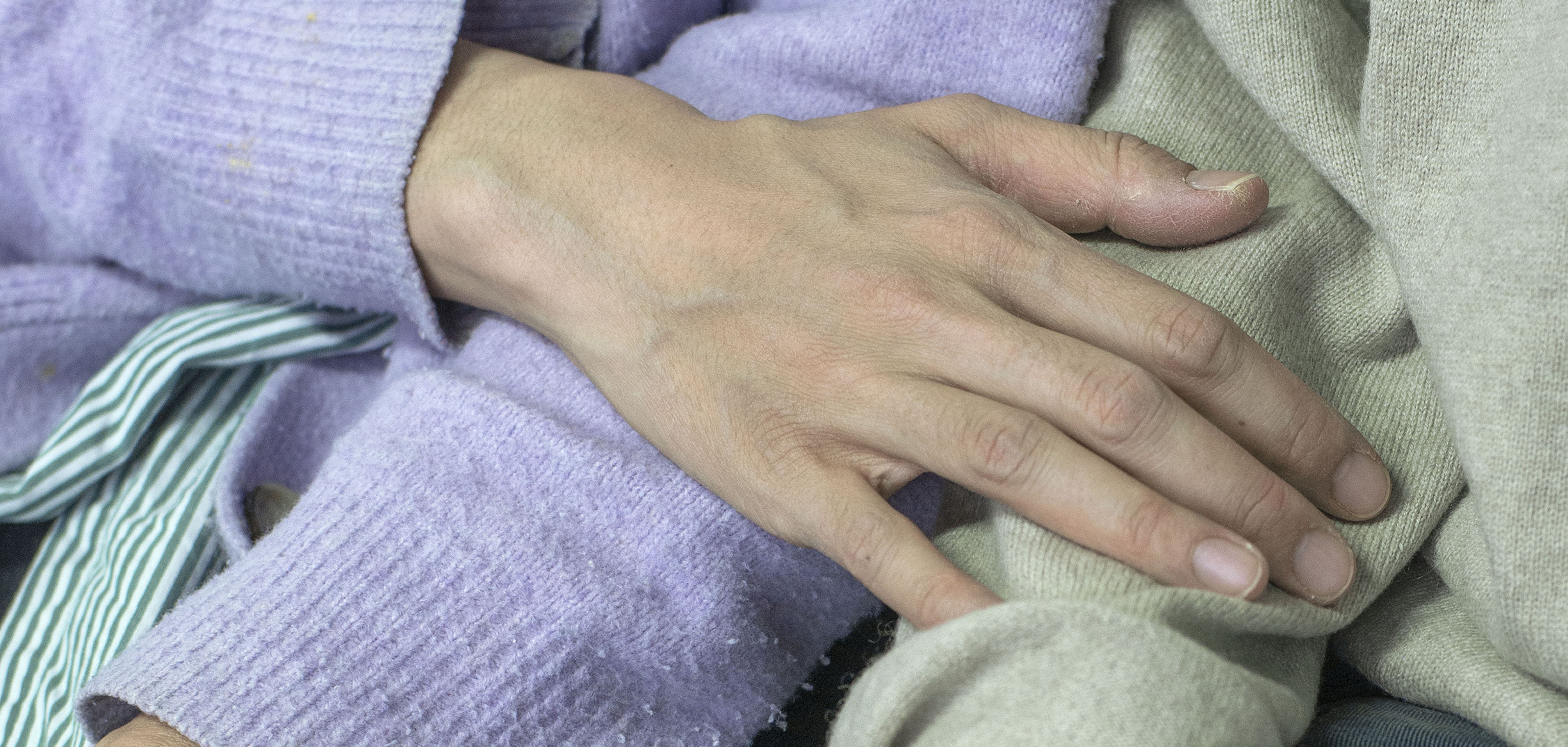
Untitled, 2022, part of the work “Weiche Knie,” 2021–ongoing, Julia Lübbecke / VG Bildkunst 2026
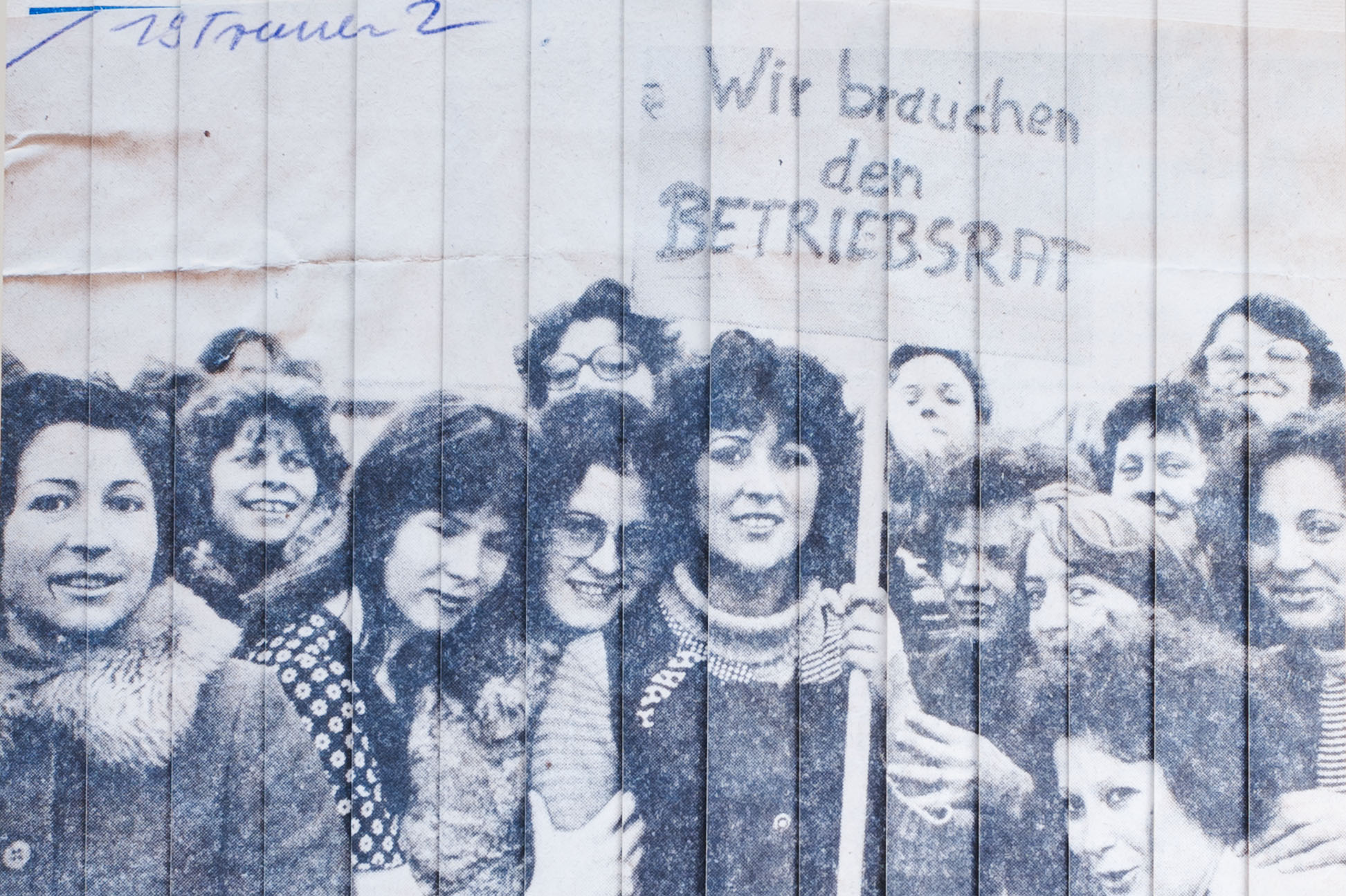
„Délire du toucher II“, Teil der Werkserie „Kleber und Falten“, 2023–Fortlaufend, Julia Lübbecke / VG Bildkunst 2026
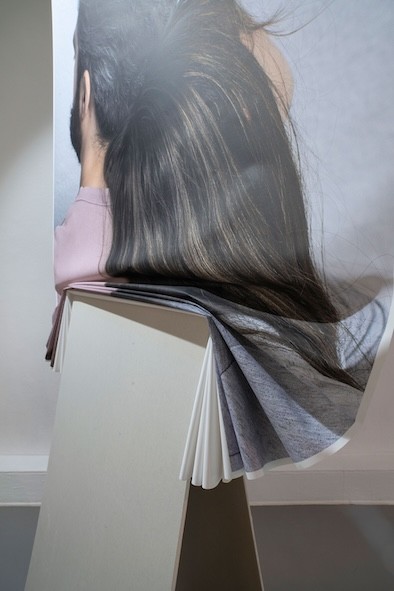
Julia Lübbecke, “Weiche Knie”, Ausstellungsansichten: “HAUT – Hülle, Organ, Archiv”, ZAK – Zentrum für Aktuelle Kunst, Zitadelle Berlin 2023, Copyright: Julia Lübbecke / VG Bildkunst 2026
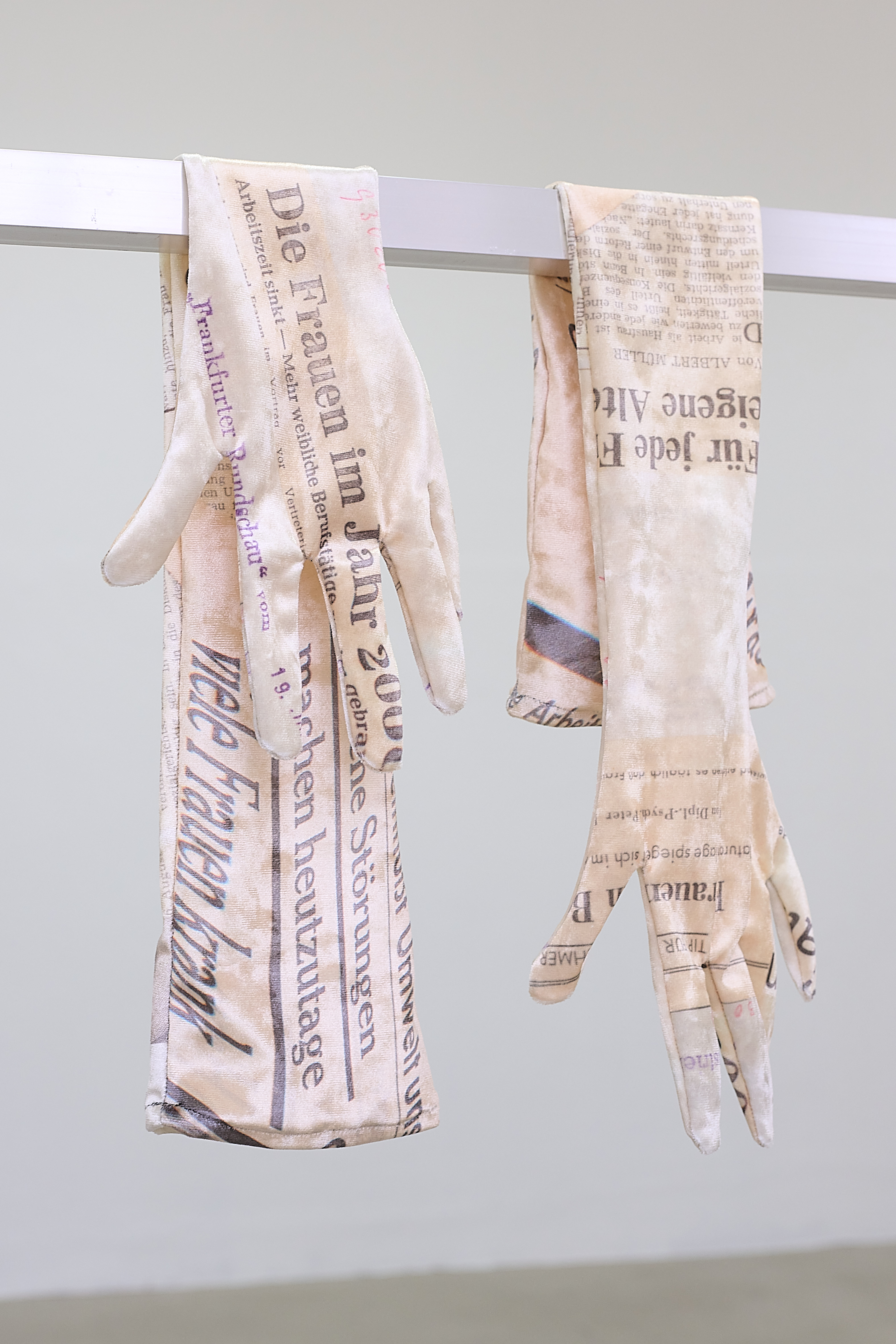
Julia Lübbecke, “wear and tear", Ausstellungsansicht: „Body in a Room“, Kunsthaus Essen, 2025, Foto: Florian Wagner. Copyright: Julia Lübbecke / VG Bildkunst 2026
Programme & Events
The Kunsthaus Kaufbeuren is presenting the first institutional solo exhibition in southern Germany by Berlin-based artist Julia Lübbecke. Julia Lübbecke works with sculptural installations, photography, text, video, and performative elements. Her artistic research projects usually take their starting point in archives or libraries. She critically examines archival materials and reproductions to explore how power relations are inscribed both in archives and in bodies. In her research on the representation of feminized labor, the historical continuity of institutional violence in medicine, and the right to bodily self-determination, she is particularly interested in the relationship between the informative and the emotional—or affective—dimensions of knowledge. The extensive solo exhibition “Tenderness, Interest & Collapse” presents three ongoing series of works together for the first time. For this exhibition, the artist adapts the installations specifically to the space and develops them further so that their interrelationships and references to one another become legible within the exhibition space.
The series Kleber und Falten (Glue and foldings) (ongoing since 2023) explores materiality and tactility in the archives of political movements. The archival materials gathered there—documenting the struggles for the right to abortion, childcare, or fair wages—reflect the precarious conditions under which these movements operate and document their history—in the form of sun exposure, sweat stains, or material residues. Julia Lübbecke translates this intertwining of materials and political struggles, as well as her own physical presence in the archive, into a space-filling installation in the form of a walk-through leporello, in which photographic-sculptural works are displayed mounted, suspended, or laid flat.
The installation Weiche Knie (Weak knees) (ongoing since 2021) explores resistant knowledge and self-help practices. It includes the artist’s own photographs of interpersonal gestures as well as material from research in queer*feminist archives. These archives document both the historical continuity of violence in the context of institutional care and practices of resistance; examples include the first feminist health centers of the 1970s, first-aid manuals on dealing with police violence, and guides on preventing unwanted pregnancies.
In the video lecture series Slight Discomfort (ongoing since 2017), the artist’s own computer screen or desktop serves as a subjective interface and the starting point. Through screen recordings, Julia Lübbecke reflects on the search for and generation of knowledge and narratives. The series explores neoliberal excesses such as Ivanka Trump’s #womenwhowork, Kathy Acker’s enthusiasm for the fragmentation of bodies, McKenzie Wark’s analysis of the cis gaze, and Jack Halberstam’s investigations into how the morphology of one’s own body influences which spaces we (are allowed to) use. Errors, interruptions, and incongruities shape the editing and visual composition of the lectures. To what extent can such glitches create alternative spaces, movements, and perspectives in which normative body politics are subverted, rejected, and unlearned?
Julia Lübbecke ↓
Julia Lübbecke (b. 1989 in Gießen) lives and works in Berlin. She studied at the Royal Academy of Fine Arts Antwerp, the Academy of Arts, Architecture and Design in Prague, and the Academy of Visual Arts Leipzig. In 2020 she participated in the postgraduate program of the Goldrausch Künstlerinnenprojekt. She is the recipient of the IKOB Award for Feminist Art 2019 and was the Dorothea Schlegel Artist in Residence at Freie Universität Berlin in 2022. She has also received grants from, among others, the Berlin Senate and the Stiftung Kunstfonds. Her most recent works were commissioned by the Deutsches Hygiene-Museum Dresden (2024) and the Kulturbüro of the City of Hannover (2025). She has exhibited internationally at the Museo de la Memoria y los Derechos Humanos in Santiago de Chile, the Busan International Photography Festival, Kunsthaus Essen, Künstler:innenhaus Bremen, Kunstverein Tiergarten in Berlin, and the IKOB – Museum for Contemporary Art in Eupen (BE). Since 2019 she has been part of the collective otc – observant thick conversation, which received the annual grant of Künstler:innenhaus Lauenburg in 2024 and has exhibited, among other venues, at Lothringer 13 Halle in Munich, Kunstverein Göttingen, and Vunu Gallery in Košice (SK).
Julia Lübbecke's artistic practice encompasses sculptural installations, photography, text works, video, and performative elements. The thematic focus of her work is the interplay between body, institution, and affect. She examines social structures of order and develops artistic strategies to make their fragility visible. Of her own practice she says: "I have been working for some time with the concept of the 'subjective archive', as it describes my way of working: the destabilization of hierarchical power structures. Normally an archive is considered an institution that proceeds from an objective viewpoint. That is what I want to question. The subjective archive is my personal collection and an invitation to discuss whether the institution of the archive is not, by its very nature, always already subjective."
Sponsored by
The Kunsthaus Kaufbeuren's program is supported by